1 June 2010

Louise Bourgeois 1911-2010

Louise Bourgeois (the last great artist of the twentieth century?) is dead.


Holland Cotter in the New York Times:

Ms. Bourgeois’s sculptures in wood, steel, stone and cast rubber, often organic in form and sexually explicit, emotionally aggressive yet witty, covered many stylistic bases. But from first to last they shared a set of repeated themes centered on the human body and its need for nurture and protection in a frightening world.

Protection often translated into images of shelter or home. A gouged lump of cast bronze, for example, suggested an animal’s lair. A tablelike wooden structure with thin, stiltlike legs resembled a house ever threatening to topple. Her series of “Cells” from the early 1990s — installations of old doors, windows, steel fencing and found objects — were meant to be evocations of her childhood, which she claimed as the psychic source of her art.

But it was her images of the body itself, sensual but grotesque, fragmented, often sexually ambiguous, that proved especially memorable. In some cases the body took the abstract form of an upright wooden pole, pierced by a few holes and stuck with nails; in others it appeared as a pair of women’s hands realistically carved in marble and lying, palms open, on a massive stone base.

Sure she was an extraordinary 98 and apparently making art until her death, but she was a great soul, and should be mourned.

20 April 2010

Best Films of the 00s (that I've seen): part three


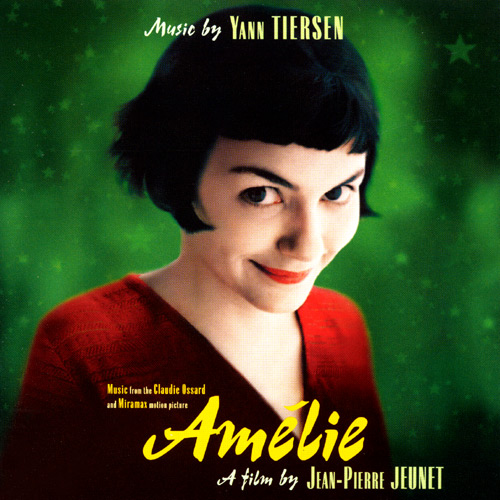
Le fabuleux destin d'Amélie Poulain (or just Amelie) (2001)
The very definition of joie de vivre. Jean-Pierre Jeunet's style is kinetic, the camera whipping about to follow any subjective whim of the central character (or whoever happens to narrating that particular bit). It's tone is whimsical, romantic, often grotesque, taking place in a magical 'Paris' of the imagination rather than a real city. Some found the mix too rich and sweet, like a cake with too much icing. I wasn't one of them.


Lord of the Rings Trilogy (2001, 2002, 2003)
Might as well consider them as a whole since their qualities are common to all three. Peter Jackson took the subject up like a personal crusade to convince the rest of us that Tolkein's world was not just for hippies, and he did it straight, without a hint of irony. Could have been kitsch in the extreme (and it sails close to the edge at times), but is delivered with such bravado and conviction, I couldn't help but be swept up in its epic wake.


Borat: Cultural Learnings of America for Make Benefit Glorious Nation of Kazakhstan (2006)
Sure, it was uneven and I sensed a lack of certainty about the tone, but that's because Sacha Baron Cohen and Larry Charles were blazing a trail, which doesn't happen too often, especially in comedy. Basically a mix of prepared sketches and seat-of-the-pants situational improvisation around a connecting theme, one is constantly astonished at Cohen's preparedness to put himself in danger (literally and comedically) and "go where no man has gone before".


Michael Clayton (2007)
Its finale should be taught in screenwriting 101: 'The Forgotten Art of the Perfect Ending'. Written by Tony Gilroy, the screenwriter of the Bourne films. A political thriller that just about restores one's faith.


Grizzly Man (2005)
The other great documentarian of the last few decades (see Errol Morris, below) is Werner Herzog, whose fact-based films are as important as his features and whose themes are a direct continuation of his particular obsessions. This displays many of them: nature as an implacable, and often malevolent, force; a visionary central character bordering on madness. Unforgettable.


Gosford Park (2001)
Robert Altman goes at the country house murder mystery with his typical dry and ironic disregard for the conventional trappings of genre. Instead of the hollow figures which usually inhabit these kind of things (Colonel Mustard in the hall with the candlestick), he furnishes the film with insightful, wry and funny observations about character and class. Various esteemed character actors have the time of their lives.


The Fog of War: Eleven Lessons from the Life of Robert S. McNamara (2003)
Errol Morris's signature interview technique of placing his camera so that the subject speaks directly into it has an almost painful intensity and gives the traditional 'talking head' a confessional quality. This has been demonstrated nowhere better than this film about the life and career of Robert McNamara, the highly controversial former U.S. Secretary of Defense. We witness a man attempting to make sense of the moral ethical choices he made, choices which may have lead directly to deaths of thousands, and come to appreciate the chiasm between intention and consequence. A film whose philosophical consequences are immense.


The Lives of Others (2006)
Successfully gives the uninitiated a taste of life as it was lived by innumerable millions under Communist rule across Europe until about 1990. Sure it's wish-fulfilment, and someone like the Stasi agent either couldn't have existed in the first place or wouldn't have survived long enough to perform the transformation depicted here, but it sure looks and feels like a genuine slice of the DDR, a 20th century panopticon.


The Others (2001)
An old fashioned horror movie, in the very best sense. So effective and skillfully told that it earns comparison to the best of the 1940s and 1950s. Nicole Kidman's nervy brittleness as an actor has never been better utilised. Underrated.


Almost Famous (2000)
It's neither as sharp or as funny as it probably should be, but has a grace and warmth that is memorable. Manages to feel perfectly credible without a line of coke or defiled groupie in sight. Owes a big debt to Billy Wilder, particularly 'The Apartment'.

Other 'Best films of the 00s' posts here and here.

22 March 2010

Welcome, America

"Welcome, America, to the world of universal health care. It will be alright. Really. Trust me. We've been there. We've had it for years, and we're doing well, thanks very much."

- The Rest of the World

17 February 2010

X-Ray


It’s difficult not to be curious
about this bone-man under the skin:
to think how he’s carried me over the years
without malice or contempt. In return
I’ve fed and clothed him of course,
shared the same bed, been shaped by his will,
but even after a lifetime together
I can’t say I know him, not for real . . .
apart, that is, from a broken wrist
when he once came peeping through.
And now there’s this inner-map of his ills,
that ageing stoop, those honeycombed hips,
the thinning tail-end bits. But what
really appals is his Model-T look.
He’s indistinguishable — except to the nurse —
From the millions like him who’ve come and gone
since one of us first stood up. Perhaps
it’s time to applaud his ancestral support
and keep this negative by the bed. Even then
it’ll be tough to view that crumbling master-plan
without a more personal sense of loss.

By Peter Bland

From Best New Zealand Poems 2003

28 January 2010

The Banquet of Cleopatra


The Banquet of Cleopatra by Giambattista Tiepolo (1743-44)

The episode represented in Tiepolo’s The Banquet of Cleopatra is drawn from the Roman historian Pliny’s Natural History (written in AD 77). Here Pliny recounted the tale of a famous contest between the Egyptian and Roman rulers (who became lovers), whereby Cleopatra wagered that she could stage a feast more lavish than the legendary excesses of Mark Antony. Tiepolo’s painting shows the dramatic moment at the end of Cleopatra’s sumptuous repast when,
faced with a still scornful Mark Antony, she wins the wager with her trump card. Removing one of a pair of priceless pearls that adorn her as earrings, Cleopatra dissolves the pearl in a glass of vinegar and drinks it, an extravagance that causes Mark Antony to lose his bet.

From a text by Ted Gott on the National Gallery of Victoria's website.


A billboard off Smith Street, Fitzroy.

27 January 2010

Lord of the Fries


Elizabeth Street, Melbourne, 2009

6 January 2010

Best Films of the 00s (that I've seen): part two

Children of Men (2006)
Manages to be both an utterly convincing depiction of a terrifying near-future and at the same time look like a rough-and-ready, low budget, hand-held record of events by a doco film crew on location. The Christian allegory in the last reel had me gasping for its fearlessness. For me the last couple of minutes were a disappointment, but boy, while it lasts it's a wild ride.

The Man Who Wasn't There (2001)
A right-angled look at Film Noir. Puts the implicit sadness, loneliness and fatigue of those classics front and centre. It's not perfect, but the result is strange, funny and unsettling.

Punch Drunk Love (2002)
A movie that grows in effect each time you see it, undercutting expectations at all times. It is short, strangely cast with Adam Sandler in the lead, with odd, unexpected musical cues and sound design, together with a preference for those empty void-like spaces we often find around shopping malls, car parks and bad motels, and yet it's animated with an unmistakable spark of life - a love story, for all that.

The Diving Bell and the Butterfly (2007)
Shouldn't have worked at all: take a story about the reduction of action and human potential down to the merest flicker and give it to Julian Schnabel, one of the biggest egos in movies. He invests the plight of its main character with a furious will to live, and what should be pure schmaltz is actually quite stark and unsentimental. It also goes further into the use of the subjective camera than any movie I can think of. Orson Welles wanted to do the same thing with Conrad's 'Heart of Darkness' in 1940 but the technology defeated him.

Memento (2001)
Its reverse-time scheme should be a gimmick but it works seamlessly and feels completely intrinsic to the story. Audacious, in a word.

Zodiac (2007)
I would happily agree that this film feels like a failure, that it takes a long time to arrive nowhere in particular, but its steadfast refusal to give easy answers stays in the mind long afterwards. Several scenes are extremely disturbing, not for explicit violence, but for the ordinary banal way terrible things can and do happen anywhere, anytime. For an American film, it most resembles the enigmas of Michael Haneke, and I wouldn't be surprised to hear that he might have been an influence on Director David Fincher.

Lost in Translation (2003)
A rarity in American cinema, a film which resides more in silences than in action. Against a situation of cultural dislocation for the characters, a kind of inter-zone, where normal codes of behaviour don't need to apply (and they are free from social constraints), the decision not to act has consequence. A film for adults.

28 Days Later (2003)
A creepy, believable zombie movie set in a near-future London, beautifully realised on a very low budget.

Amores Perros (2001)
Films with intricate multi-story structures were flavour of the month in the early decade, but this is the best of them, even if the pitfalls are not always avoided. Like the best Latin cinema, it is bold, broadly drawn and intensely emotional.

The Bourne Identity (2002), Supremacy (2004), Ultimatum (2007)
You can take your pick of the Bournes, their virtues are common to all. Exciting, kinetic action which is also cinematic and coherent, unlike so much contemporary action footage ("Put in a dozen cameras from every angle and we'll make sense of it in 'post'"). Thoughtful story in a 1960s paranoid geo-political thriller vein but which is constructed to feel plausible. Bourne himself is a sympathetic character played with restraint by Matt Damon.

24 December 2009

Eating eyren in Kent

William Caxton, the first person to print a book in English, noted the sort of misunderstandings that were common in his day in the preface to Eneydos in 1490 in which he related the story of a group of London sailors heading down the 'tamyse' for Holland who found themselves becalmed in Kent. Seeking food, one of them approached a farmer’s wife and “axed for mete and specyally he axyd after eggys” but was met with blank looks by the wife who answered that she “coude speke no frenshe.” The sailors had traveled barely fifty miles and yet their language was scarcely recognizable to another speaker of English. In Kent, eggs were eyren and would remain so for at least another fifty years.

From Bill Bryson's 'Mother Tongue: The English Language'.

22 December 2009

Best Films of the 00s (that I've seen): part one

It's the end of the decade* - time for a list.

One of the interesting things about doing this is to surprise yourself with which films linger in the memory even after the passing of years. It's a good test too, to check out which films remain good even after their cultural moment has passed. This is why second viewings are so important.

I intend to keep adding to these lists as I catch up with the decade. Just titles and a thought or two that comes to mind, in no particular order.

Adaptation (2002)
Wonky in places, but Charlie Kaufman's screenplay is so startlingly original, you wonder how it works as well as it does. Self-referential, self-reflexive. Examines its own turning gears even while the motor's running.

Mulholland Drive (2001)
Starts out like a brightly coloured parody of Hollywood visual syntax, then lurches sickeningly to the left, revealing a related, but tonally different alternate reality. Like an optical illusion: disorientating, but makes perfect sense when looked at from just the right angle. From David Lynch, a true original.

No Country For Old Men (2007)
Cool and unsparing. Otherwordly performance by Javier Bardem, who stands in for the Coen brothers' recurring character of the personification of objective evil.

Spirited Away (2001)
Marriage of masterly traditional animation and a bold story, with the halls bedecked in some obscure and very weird Japanese cultural and religious references.

The Incredibles (2004)
Smart, funny and jaw-droppingly well designed in retro-futuristic style. The pace never slackens for a moment and themes of family, talent, potential and validation are touchingly explored. A movie for outsiders everywhere.

Infamous (2006)
Suffered from a badly timed release, but this is a superior depiction of the events related in Capote's 'In Cold Blood', his research of the disturbing murders, their historical and cultural context, and the effect of all this on the unusual personality of its author.

Star Trek (2009)
Smartly resuscitated a moribund cycle of films by looking at the familiar themes with an outsider's eye. Energetic and often exciting.

Eternal Sunshine of the Spotless Mind (2004)
An apparently low budget, lots of simple hand-held camera, in unemotional washed-out colour. Just the right approach for such knotty, emotionally fraught subject matter, which, despite it science fiction premise, has the emotional predicament faced by the characters at its very centre. A typically ambitious, thematically rich screenplay by Charlie Kaufman.

Burn After Reading (2008)
Widely underappreciated and misunderstood. A comedy that is also an utterly bleak rendition of human nature, a kind of vanitas in 35mm, something that is rarely depicted in art but familiar in life: petty maleficence - if not actual evil - of the kind found in every newspaper and the consequences for those caught up in its banal grip.

Ratatouille (2007)
Breathtaking design and superb animation of the kind that would have made Walt Disney stand up and applaud, combined with an affecting story about the critical importance of art and the path to self-actualisation. Despite the cutting-edge technology, its virtues are classical.

* Of course, I know that technically we are still a year from the end of the decade, but everyone else is doing it...

20 December 2009

'Basterds' the best film of 2009? Not bloody likely

So radio Three Triple R's 'Film Buff's Forecast' program has just brought down its listeners' votes for the films of 2009, and I'm not happy.

Every year since I was about 16 I've been listening to the show's annual votes for best, worst, most overrated and most underrated films of that year. I go back to when John Flaus and Paul Harris were the only voices heard. These days it's a whole gallery of voices, which is fine when they engage in constructive disagreement but not so much fun when some nameless voice, whose authority I have no way of assessing, goes on at length with opinions I disagree with! So I particularly enjoy the discrepancies between the critics' films and those voted by listeners.

Some think lists are childish but I'm a sucker for lists of all kinds. In my worst moments, I've resembled John Cusack's character in 'High Fidelity': "Ten best album tracks, side one, track one..." They're a kind of intellectual chewing gum, designed to get the juices flowing.


But jeez, 'Inglourious Basterds' as the best film of 2009? God help us. The critics and listeners were united on 3RRR and I'm appalled.

Okay, so it was stylish in that swashbuckling Tarantino style that he does so well. Bravura, I think it's called, and ten points for sheer balls. Very few film makers of any generation have the strength of their convictions to such an extent as to back themselves and their intuitions against what was, I imagine, widespread scepticism that such a bizarre idea would ever get made.

But its juvenile brutality and fascism is harder to forgive. It's certainly not the only film of the last couple of years to show an almost autistic lack of appreciation or understanding of the experiential weight of violence in cinema; 'Pan's Labyrinth' comes readily to mind. But while that film also had a historical setting (or in the case of 'I.B.' an alternative-historical setting), it took place in a fictional space that relied on the Spanish Civil War only as a contextual frame for the hard-edged fantasy that was really the interest of the movie.

'I.B.' on the other hand, doesn't make sense without the emotion and moral heft that the Holocaust subject matter brings with it. Tarantino relies on that historical and cultural burden to charge the events he asks us to experience with significance. What at first annoyed me and then by the end of the film made me angry, was that he uses the faith that we the audience place in him that he won't exploit a historical truth (whose significance doesn't need to be expanded upon) cheaply or to no good end. But that's exactly what he does do.

There is no necessary connection between the events of history and their cultural reflection in this universe. The Holocaust, the Second World War as a whole, is nothing but a set of cultural tropes he can move around and play with with a grin on his face. This war movie is not a film about war, but a film about films about war. The difference is crucial. There is therefore no debt to experience, to life.

But the film has it both ways. To a large degree, it misleads badly with the first scene, which introduces the main character, the anti-hero Col. Hans Landa, as he interrogates a french farmer on suspicion of harboring Jews, who we are allowed to see cowering under the floorboards. The scene unfolds slowly, with discipline, resulting in great suspense. Nail biting, as they say. It ends badly, but its emotional kick is not just a mechanical function of the classic techniques of suspense, but also an extratextual response to the affect of the subject matter. We know what is at stake for the innocents under the floorboards because we know that their fate will be to disappear into ashes.

This scene leads an attentive viewer (I believe) to frame an expectation that what we are about to watch will keep faith with that stock of memories, images, stories we have all inherited as children of the twentieth century. This faith, having been set up, is gleefully torn up in the subsequent spectacle.

This early discipline is also jettisoned for the rest of the film. I have not heard a single critic notice how interminable is the central key scene in a cellar bar, where allied soldiers impersonating Nazi officers attempt to make contact with a resistance figure in the French underground. An English officer with a proficiency in German attempts to maintain the mask, but his unusual accent gives him away to his audience. This would have been dealt with by a classical director like William Wellman or John Ford in a few minutes of tension, but instead it drags on and on, pointlessly. What is worse, during the whole scene, one of the other impersonators remains mute - yet he is the only authentic German in the bunch! Why?

Finally, Tarantino has his English officer give himself away by making a typically English - not German - hand gesture. The only problem is that when it happens we don't know what it means until it is explained to us by one of the characters later! A moment which should be tense beyond endurance for the audience is thrown away in sluggish editing and sloppy writing.

Lovers of the film will no doubt object that I am guilty of a lack of appreciation for Tarantino's use of ironic self-reference and intertextuality. Maybe I am. Maybe the subject matter just doesn't lend itself to merrymaking in the playpen of ironic detachment. It is plain that the final third of the film, which is an extended revenge fantasy where Hitler and all the members of the Nazi High Command perish in a burning cinema (oh the jolly irony!) while the fleeing audience is strafed with machine guns held by the 'good' guys. You can tell they're good guys because they're Jewish. If this sounds dumb, it's because it is dumb, beyond words.

After this, it hardly matters any more when the brutal but charismatic Landa has his forehead slowly carved up with a very large knife. By that stage I was numb, which I suppose means that this movie was not for me. I figure I was supposed to enjoy this, feeling that the villain got his comeuppance, just as I was supposed to cheer as the cinema audience (shot from above) screamed as they were being machine-gunned to death. Instead I felt as if I was being made complicit in a bloodthirsty spectacle without moral reference point. A film that had started out doing everything it could to evoke an emotional response for the oppressed and against the oppressor, reversed the poles, asking me to cheer indiscriminate murder on the basis that it was being perpetrated against the 'right' enemy. There's a name for this. Goebbels would have recognised the technique, since he virtually invented it.

This is not the first time a blindingly stupid and immoral film has been lauded by critics almost universally, but I'm mainly disappointed because people whose judgements I generally respect have either been so easily fooled, or don't care.

14 December 2009

Minor atmospheric disturbances

In normal conversation we speak at a rate of about 300 syllables a minute. To do this we force air up through the larynx --- or supralaryngeal vocal tract, to be technical about it --- and, by variously pursing our lips and flapping our tongue around in our mouth rather in the manner of a freshly landed fish, we shape each passing puff of air into a series of loosely differentiated plosives, fricatives, gutturals, and other minor atmospheric disturbances. These emerge as a more or less continuous blur of sound. People don't talk like this, theytalklikethis. Syllables, words, sentences run together like a watercolor left in the rain. To understand what anyone is saying to us we must separate these noises into words and the words into sentences so that we might in our turn issue a stream of mixed sounds in response. If what we say is suitably apt and amusing, the listener will show his delight by emitting a series of uncontrolled high-pitched noises, accompanied by sharp intakes of breath of the sort normally associated with a seizure or heart failure. And by these means we converse. Talking, when you think about it, is a very strange business indeed.

From Bill Bryson's 'Mother Tongue: The English Language'.

8 December 2009

Black and Weird


From Black and WTF, "A photoblog of really strange black & white photos".

6 December 2009

Zombie mathematics


“An outbreak of zombies is likely to be disastrous, unless extremely aggressive tactics are employed against the undead,” the authors wrote. “It is imperative that zombies are dealt with quickly, or else we are all in a great deal of trouble.”

From Wired, 'Mathematical Model for Surviving a Zombie Attack' by Betsy Mason

31 October 2009

Design for Obama


It was an experiment in linking grassroots activism with the political machine using new technology, and it is being studied by wonks around the world.

Hundreds of artists and designers expressed support for the Obama candidacy by designing posters and submitting them to designforobama.org for free download. Many of these were actually taken up by the campaign, and others just travelled the superhighway as viral emails, making their point on their own.

Taschen is publishing Design for Obama. Posters for Change: A Grassroots Anthology This selection of the best, curated by Spike Lee and Aaron Perry-Zucker, is a visual document of this most inspirational U.S. presidential campaign.

30 October 2009

Guard of honour


Staff of the Sanaga-Yong Chimpanzee Rescue Centre let the chimps watch the burial of Dorothy, an elderly chimpanzee, so they could come to terms with her loss.

From Times Online.

19 October 2009

Shorpy

Michael Leddy coined the wonderful expression 'dowdy world' to describe glimpses of bygone times that occasionally pop up in old movies, television shows, or anywhere at all. His definition: “modern American culture as it was before certain forms of technology redefined everyday life”.

Well, ‘Shorpy’ is the dowdy world on rollerskates.

It is one of the handful of websites I can't live a week without visiting at least once, and I love it with an ardent passion.

My favourites are the bizarre pics from from the archive called the National Library...


...and the breathtakingly detailed images of turn of the century city architecture, like this one of the Philadelphia Post Office in 1900.


The site describes itself: "Shorpy.com: History in HD is a vintage photography blog featuring thousands of high-definition images from the 1850s to 1950s. The site is named after Shorpy Higginbotham, a teenage coal miner who lived 100 years ago."

It appears to be a shared site where a very select number of contributors upload images in very high definition. They appear to have been scanned from the original negatives. This is astounding because the site has a large collection of truly classic images, including many pictures by the greats Walker Evans, Dorothea Lange and Lewis Hine.

Most of these pictures are not the recogniseable classics from photographic history, but the now vast collection is a more comprehensive picture of each photographers’ working practice than would be possible in even the biggest survey exhibition. In the case of Lewis Hine in particular, I've had to reassess my view of his significance to the medium.

When I was taught photography, the conventional view of Lewis Hine I intuited was that he was a great documentarian but whose credentials as an artist were somewhat in question. A view was that the haunting quality his pictures so often had was more to do with the heartbreaking subject matter of child labour and exploitation that he did so much to reveal than any completely conscious and expressed aesthetic intention.

Certainly the subject matter is compelling (and there is art in that), but there’s clearly more here than just the handprint of a great documentary photographer. Very frequently, too frequently to be an accident, he invests an apparently utilitarian image with the grace and insight of a true portrait.


The achievement becomes all the more awe-inspiring when we consider the circumstances under which many of the images were taken. His period of greatest activity in the social documentary field was the first decade of the century, when he worked for social activist magazines and for social documentary projects like the Pittsburgh Survey. He also worked for the National Child Labour Committee for eight years and published two books of his pictures, 'Child Labour in the Carolinas' (1909) and 'Day Laborers Before Their Time' (1909).

Taking these images often involved working under great pressure. To gain access Hine sometimes hid his camera and posed as a fire inspector.

In 1916 Congress eventually agreed to pass legislation to protect children. Owen Lovejoy, Chairman of the National Child Labour Committee, wrote that: "the work Hine did for this reform was more responsible than all other efforts in bringing the need to public attention."

Hine had great difficulty earning money from his photography. In January 1940, he lost his home after failing to keep up repayments. Lewis Wickes Hine died in extreme poverty eleven months later on 3rd November, 1940.

Here’s to Shorpy Higginbotham and to Lewis Hine, who sought to record his existence, reflect his experience, change the conditions under which he worked and to create art.

8 October 2009

Histoire des races maudites

Sitting in her little house near Tarbes, in the French Pyrenees, Marie-Pierre Manet-Beauzac is talking about her ancestry.

For most people this would be agreeable, perhaps even pleasurable. For the 40-something mother-of-three, the story of her bloodline is marked with a unique sadness: because she belongs to an extraordinary tribe of hidden pariahs, repressed in France for a thousand years.

Marie-Pierre is a Cagot.

From Sean Thomas in The Independent.

4 October 2009

Steamer trunk office

I'm calculating what I would have to sell to get my hands on one of these.


This is the Mayfair Steamer Secretary Trunk, made of "Vintage Cigar Leather", whatever that is.

The blurb reads:

Crafted by antiques dealer and furniture maker Timothy Oulton of London, our oversized steamer trunk armoire is configured as an ingeniously designed secretary.

- Reproduction antique steamer trunk
- Handmade of distressed vintage cigar leather over a solid wood frame
- Aniline-dyed leather has an antiqued, vintage look
- Accented with over 3,000 hand-hammered brass nailheads
- Features a pull-down desktop and multiple drawers, cubbies, wire management and bookshelves
- Lined in leather-edged canvas
- Stands on wheels for mobility and closes for storage and privacy
- Leather-bound corner brackets, leather-wrapped handles, oak slats with a tobacco finish and cast-metal antiqued hardware
- No two are exactly alike, making each trunk truly unique
- Leather is resistant to scratches and becomes softer over time and with use, contributing to its antiqued patina
- Dimensions: 39"W x 29"D x 76"H

Now all I need is the New York loft to put it in.

14 September 2009

'Cold Comfort Farm'


I’ve just had a thoroughly good time reading Stella Gibbons’ ‘Cold Comfort Farm’, and marvelling that a satirical novel published in 1932 could still be so much fun, long after the sources of the joke have faded or disappeared entirely.

It was intended as a satire of the fashionable rural novels of the time, sending up authors who are mostly forgotten or of interest only because she did them over. The exception is D.H. Lawrence, who was only the most self-consciously highbrow exemplar of the style.

For a first novel by a young woman in her twenties, when most novels were not by young women let alone those in their twenties, it is astonishingly self-assured and full of energy. She was a journalist and book-reviewer at the time and I can imagine the implied pressure not to burn bridges with those she might bump into at the next cocktail party, not to mention those who might employ her in the future. What a gamble.

In a strange, knowing flourish, she even flags paragraphs with an asterisk when she’s being particularly naughty, on a scale from one to three. Hence:

*** The man’s big body, etched menacingly against the bleak light that stabbed in from the low windows, did not move. His thoughts swirled like a beck in spate behind the sodden grey furrows of his face. A woman… Blast! Blast! Come to wrest away from him the land whose love fermented in his veins like slow yeast. She-woman. Young, soft-coloured, insolent. His gaze was suddenly edged by a fleshy taint. Break her. Break. Keep and hold and hold fast the land. The land, the iron furrows of frosted earth under the rain-lust, the fecund spears of rain, the swelling, slow burst of seed-sheaths, the slow smell of cows and cry of cows, the trampling bride-pride of the bull in his hour. All his, his…

Phew! And the punch line:

He stood at the table facing Flora and blowing heavily on his tea and staring at her. Flora did not mind. It was quite interesting: like having tea with a rhinoceros.

I have seen the more recent film of the book, directed by John Schlesinger and featuring Ian McKellan and Eileen Atkins. Even after reading the novel, I still think it is extremely good. It actually adds something to the experience of reading the book. I heard their broad rustic accents in my head as I went.

Some juicy bits. McKellan as amateur preacher Amos, discovers his gift move the humble folk of the Church of the Quivering Brethren with terrible enthusiasm:

"Ye miserable, crawling worms, are ye here again, then? Have ye come like Nimshi son of Rehoboam, secretly out of yer doomed houses to hear what’s comin’ to ye? Have ye come, old and young, sick and well, matrons and virgins (if there is any virgins among ye, which is not likely, the world bein’ in the wicked state it is), old men and young lads, to hear me tellin’ o’ the great crimson lickin’ flames o’ hell fire?"

. . .
In novels, persons who turned to religion to obtain the colour and excitement which everyday life did not give them were all grey and thwarted. Probably the Brethren would be all grey and thwarted… though it was too true that life as she is lived had a way of being curiously different from life as described by novelists.

I kept wondering what George Orwell would have made of Stella Gibbons. As, I suppose, a good journalist, her prose showed all the virtues of concision and clarity that he regarded so highly. As a novel with a political heart, he would have found its lack of class consciousness highly questionable, and her feminism just a little beyond his definition of progressive, as limited by his time and place as that was. I searched the index of the ‘Collected Essays, Journalism and Letters’ without result. A pity, but she would have found his asceticism a bit much, not to mention his lack of a sense of humour. Cheer up you earnest old socialist and have a glass of champagne!

They would have bonded over a shared disdain for literary and cultural pretension. Here is Mybug, a sexually obsessed intellectual, as he attempts to engage in fruitful conversation with a visiting Hollywood talent scout, a Mr Earl P. Neck, on the lookout for the next matinee idol.

“’Have you ever seen Alexander Fin?’ asked Mr Mybug. I saw him in Pepin’s last film, ‘La Plume de Ma Tante’, in Paris last January. Very amusing stuff. They all wore glass clothes, you know, and moved in time to a metronome.”

The heart of the novel is Gibbons’ heroine (and alter ego, given that she was herself a smart go-getter under thirty) Flora Poste, a new woman, one of the bright young things, wilful, assertive, with a very low tolerance for self indulgence and a passion for tidiness in all its forms:

She liked Victorian novels. They were the only kind of novel you could read while you were eating an apple.

One of the advantages of almost universal education was the fact that all kinds of persons acquired a familiarity with one’s favourite writers. It gave one a curious feeling; it was like seeing a drunken stranger wrapped in one’s dressing gown.

All the inmates of Cold Comfort sustain themselves on various fruits of misery, which each of them invokes to justify their refusal to engage with life and its real potential. “I saw something nasty in the woodshed!” screams the gothic Aunt Ada from her refuge and throne at the top of the house, where she is the master of all she can see.

The wordly-wise, sophisticated busybody Flora Post sees her mission in tidying up the place, which means making herself the catalyst for change and emotional resolution for each character in turn. This is framed at the beginning of the novel as Flora simply concocting something to keep herself busy, but the author's intention is quiet serious.

When she’s not being witty with extreme prejudice, Gibbons has a point to make, which she stitches seamlessly into the novel. It is something to do with life and way it should be lived in the shadow of the grave, which is to say, not in the shadow of the grave, but in the light. Life is other people.

A little later, as she sat peacefully sewing, Adam came in from the yard. He wore, as a protection from the rain, a hat which had lost – in who knows what hintermith of time – the usual attributes of shape, colour and size, and those more subtle race-memory associations which identify hats as hats, and now resembled some obscure natural growth, some moss or sponge or fungus, which had attached itself to a host.

An added bonus: it comes in the beautiful new/old Penguin Classics, in all their lovely orangeness.

2 September 2009

Michael Lusk's disciplined eye


Originally uploaded by finsmal...Low & Slow.

A quality I sincerely admire in photographers is something I call "a disciplined eye".

I suppose I mean an ability to seek out and find pictures in the world, even in the most unremarkable and apparently chaotic places. By 'pictures' I don't just mean images, since anyone with a finger can make an image. I mean something with structure, whose features amount to an aesthetic argument of some kind, the evidence of a discriminating consciousness.

It's a quality that is so easy to miss in others, since our landscape is saturated in images so that we come to think that such things are part of nature. But they're not. They have be constructed from educated sensation. If you don't think it's difficult, just try it.

I found this person (photographer Michael Lusk) somewhere in the photographic dumpster that is Flickr.